
Exfoliation is one of the most effective ways to improve your skin’s texture, clarity, and overall glow. But not all exfoliation works the same way.
Chemical vs. Physical Exfoliation Explained

Skin Care
Chemical vs. Physical Exfoliation Explained
Which is Right For Your Skin?
Exfoliation is one of the most effective ways to improve your skin’s texture, clarity, and overall glow. But not all exfoliation works the same way. If you’ve ever wondered whether to use a scrub or a serum, you’re really asking about the difference between physical (manual) and chemical exfoliation.
Understanding how each works—and which is best for your skin—can make a noticeable difference in your results.
What Is Exfoliation, Really?
Your skin naturally sheds dead cells, but this process can slow down over time due to aging, sun exposure, or certain skin conditions. When those cells linger, they can lead to:
- Dull or uneven tone
- Rough texture
- Clogged pores
- Breakouts
Exfoliation helps remove that buildup, revealing fresher, smoother skin underneath.
Physical Exfoliation: The “Polishing” Approach
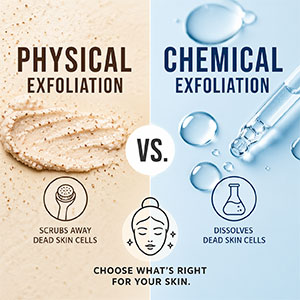
- Physical exfoliation uses a manual method to remove dead skin cells. Think scrubs, brushes, or textured pads.Common examples:
- Facial scrubs with beads or granules
- Exfoliating brushes or tools
- Microdermabrasion treatments
How it works:
It physically buffs away dead skin cells from the surface.
Pros:
- Immediate smoothness
- Easy to understand and use
- Can be effective for thicker, oilier skin
Cons:
- Can be too harsh if overused
- May cause irritation or micro-tears
- Not ideal for sensitive, acne-prone, or rosacea-prone skin
Bottom line:
Physical exfoliation can be helpful, but it requires a gentle hand. More pressure doesn’t mean better results—in fact, it often backfires.
Chemical Exfoliation: The “Dissolving” Approach
- Chemical exfoliation uses acids or enzymes to loosen and dissolve the bonds between dead skin cells, allowing them to shed more evenly.Common types:
- AHAs (Alpha Hydroxy Acids) – like glycolic or lactic acid
- Best for: dry or sun-damaged skin
- BHAs (Beta Hydroxy Acids) – like salicylic acid
- Best for: oily or acne-prone skin
- Enzymes – often derived from fruits
- Best for: sensitive skin
How it works:
Instead of scrubbing, these ingredients encourage your skin to release dead cells naturally, often penetrating deeper than physical exfoliants.
Pros:
- More even, controlled exfoliation
- Can target specific concerns (acne, fine lines, pigmentation)
- Typically gentler long-term when used correctly
Cons:
- Can cause irritation if overused or too strong
- Requires consistency rather than instant results
- Sun sensitivity increases—SPF is essential
Bottom line:
Chemical exfoliation is often more precise and effective, especially for treating specific skin concerns. - AHAs (Alpha Hydroxy Acids) – like glycolic or lactic acid
Which One Should You Choose?
There isn’t a one-size-fits-all answer—it depends on your skin type and goals.
You might prefer physical exfoliation if:
- Your skin is thicker or oilier
- You want quick, visible smoothness
- You use it gently and infrequently
You might benefit more from chemical exfoliation if:
- You have acne, discoloration, or fine lines
- Your skin is sensitive or easily irritated
- You want long-term skin improvement
Can You Use Both?
Yes—but carefully.
Some people benefit from alternating or combining both methods in a controlled way. However, over-exfoliation is one of the most common skincare mistakes and can lead to:
- Redness
- Sensitivity
- Breakouts
- Compromised skin barrier
When in doubt, less is more.
A Smarter Approach to Exfoliation
Think of exfoliation less like sanding wood and more like editing a photograph—subtle adjustments, done thoughtfully, create the best results.
At Seeberger Dermatology, we help patients choose the right exfoliation method based on their skin type, lifestyle, and goals. In some cases, professional treatments or medical-grade products can deliver better results with less irritation.
Final Thought
- Both physical and chemical exfoliation can be effective—but the real difference comes down to how they’re used.
- Physical exfoliation = immediate, surface-level smoothing
- Chemical exfoliation = deeper, more targeted skin renewal
Choosing the right one isn’t about trends—it’s about what your skin actually needs.