
Aging is a natural part of life, but many people are surprised by how much their skin changes over the decades. While genetics play a role, factors such as sun exposure, lifestyle habits, and skincare routines can significantly influence how skin ages.
Skin Changes After 40

Skin Care
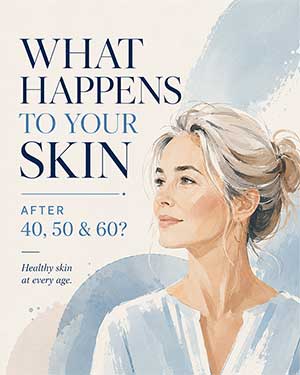
What Happens to Your Skin After 40, 50, and 60?
Aging is a natural part of life, but many people are surprised by how much their skin changes over the decades. While genetics play a role, factors such as sun exposure, lifestyle habits, and skincare routines can significantly influence how skin ages.
Understanding what happens to your skin after 40, 50, and 60 can help you make informed decisions about skincare, prevention, and treatment options.
Skin Changes After 40
For many people, the first noticeable signs of aging become more apparent during their 40s.
Common Changes
- Fine lines around the eyes and mouth become more visible.
- Collagen production begins to decline, leading to reduced firmness.
- Skin may appear duller and less radiant.
- Cell turnover slows, causing rougher texture.
- Sun damage accumulated over the years may appear as age spots or uneven pigmentation.
What Helps?
Daily sunscreen use becomes even more important. Medical-grade skincare products containing retinoids, antioxidants, and peptides can help support collagen production and improve skin texture. Professional treatments may also help address early signs of aging before they become more pronounced.
Skin Changes After 50
Hormonal changes, particularly during and after menopause, often accelerate skin aging.
Common Changes
- Skin becomes noticeably thinner and drier.
- Elasticity decreases, leading to sagging around the jawline and neck.
- Wrinkles become deeper and more persistent.
- Age spots and uneven pigmentation may become more pronounced.
- Blood vessels may become more visible as skin thins.
What Helps
Hydration becomes a key focus. Rich moisturizers, gentle cleansers, and products designed to support the skin barrier can improve comfort and appearance. Many patients also explore cosmetic treatments to address volume loss, wrinkles, and sun damage.
Regular skin examinations are also important, as the risk of skin cancer increases with age.
Common Changes
- By the time we reach our 60s, the skin has undergone decades of environmental exposure and natural aging.
Skin Changes After 60
- Significant loss of collagen and elastin.
- Increased skin fragility and easier bruising.
- More pronounced wrinkles and skin laxity.
- Slower wound healing.
- Greater susceptibility to skin cancers and precancerous lesions.
- Dryness and itching may become ongoing concerns.
What Helps
Consistent skincare remains beneficial at every age. Gentle cleansing, daily moisturizing, and sun protection continue to play important roles. Dermatologic treatments can help improve comfort, maintain skin health, and address concerns ranging from cosmetic aging to medical skin conditions.
The Importance of Sun Protection at Every Age
One of the most important facts about skin aging is that much of what we associate with “getting older” is actually the result of cumulative sun exposure.
Ultraviolet (UV) radiation breaks down collagen and elastin, contributes to age spots, and increases the risk of skin cancer. Wearing a broad-spectrum sunscreen with SPF 30 or higher, seeking shade, and wearing protective clothing can help preserve skin health throughout life.
When to See a Dermatologist
While some skin changes are expected with age, others may warrant professional evaluation. Schedule an appointment if you notice:
- New or changing moles
- Non-healing sores
- Persistent redness or irritation
- Rapidly growing spots or lesions
- Sudden changes in skin texture or pigmentation
A dermatologist can help distinguish normal aging from conditions that require treatment and recommend personalized options for maintaining healthy skin.
Aging Gracefully Starts with Healthy Skin
Every decade brings changes, but healthy skin is possible at any age. By protecting your skin from the sun, maintaining a consistent skincare routine, and scheduling regular skin examinations, you can help keep your skin looking and feeling its best for years to come.
If you have concerns about aging skin, sun damage, or skin cancer prevention, the team at Seeberger Dermatology can help you develop a treatment plan tailored to your needs.